

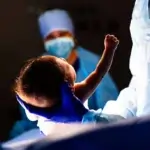
Gastroshiza sounds complicated, but let’s simplify it. It’s a medical condition that affects babies before they’re even born. It occurs when the baby’s abdominal wall fails to close fully during early pregnancy. This leaves a small opening, usually near the belly button, where the intestines — and sometimes other organs — protrude into the amniotic fluid instead of remaining inside the body.
Doctors call this a congenital disability, meaning it’s something the baby is born with, not something that develops later. It’s serious but treatable. In most cases, babies born with gastroshiza survive and go on to live healthy lives after surgery.
What Exactly Happens in Gastroshiza
Normally, during pregnancy, a baby’s intestines form inside the belly and stay there as the abdominal wall closes. In gastroshiza, that process doesn’t finish properly. The opening, typically about one to two inches wide, allows the intestines to protrude. Any sac or membrane does not protect the organs — they float freely in the amniotic fluid.
Because they’re exposed, these intestines can become swollen, thick, or irritated. That’s one of the primary challenges doctors face immediately after birth. The longer the intestines are exposed, the higher the risk of infection or damage.
How Common Is It?
Gastroshiza is rare, but not extremely rare. It affects about 1 in every 2,000 to 4,000 babies worldwide. Medical reports show that it’s more common among younger mothers, especially those under 25. Some research points to possible links with smoking, alcohol, and drug use during pregnancy, though the exact cause isn’t fully understood.
Unlike some genetic conditions, gastroshiza doesn’t usually run in families. It’s often a random developmental issue that happens early in pregnancy — usually between the 4th and 8th week when the abdominal wall is forming.
How Doctors Diagnose It
Most cases are detected during a routine ultrasound, typically around weeks 18 to 20 of pregnancy. The scan shows a clear picture of the baby’s organs outside the belly. Once it’s detected, doctors monitor the baby’s growth closely and plan the delivery in a hospital with neonatal surgical care.
Sometimes, blood tests reveal higher levels of a protein called alpha-fetoprotein (AFP), which can be a sign of this condition. After diagnosis, the healthcare team schedules more frequent checkups and develops a delivery plan, often through a planned induction or C-section to reduce complications.
Why Gastroshiza Happens
Doctors don’t have a single explanation yet, but they agree it’s related to how the baby’s abdominal wall forms in early pregnancy. There may be a problem in the blood flow that affects how the wall closes. Environmental and lifestyle factors, such as poor nutrition, exposure to certain chemicals, or infections, may also play a role.
Younger mothers seem to have a higher chance of having a baby with gastroshiza. But this doesn’t mean older mothers are completely safe from it. It simply means that younger age groups appear to be at a higher statistical risk.
Treatment and Surgery
Treatment starts right after birth. Babies with gastroshiza need surgery to place the organs back inside the belly and close the hole. Doctors usually do one of two types of surgery:
1. Primary Closure
If the intestines are not too swollen, surgeons can place them back inside the abdomen in one go and stitch the opening closed.
2. Staged Closure (Using a Silo Bag)
If the organs are too swollen or there’s not enough space in the abdomen, doctors use a clear protective pouch called a silo bag. The intestines are gently placed inside this bag, which is attached to the baby’s belly. Over a few days, doctors slowly move the organs back inside until the abdomen can be closed safely.
After surgery, the baby stays in the neonatal intensive care unit (NICU) for monitoring. Feeding starts gradually, and doctors watch for any signs of infection, bowel problems, or breathing issues.
Recovery and Long-Term Outlook
The good news is that survival rates for babies with gastroesophageal reflux disease (GERD) are over 90% when treated early. Most babies grow up normally and don’t have long-term health issues. However, some individuals may take longer to digest food properly, or they may develop short bowel syndrome if a portion of the intestine is damaged.
Parents often spend a few weeks or months in the hospital while their baby recovers. It’s a tough start, but most families go home with a healthy baby after the surgical and feeding challenges are managed.
Comparison: Gastroshiza vs. Other Abdominal Wall Defects
Condition Description Covered by Sac?Typical Surgery Needed
Gastrointestinal Intestines come out through a hole near the belly button. No, Yes, immediate or staged
Omphalocele: Intestines and organs protrude through the umbilical cord. Yes, often more complex
Umbilical Hernia: A Belly button bulge caused by incomplete closure. Yes, sometimes, but it often heals naturally
While gastroshiza and omphalocele appear similar in scans, the difference is crucial — gastroshiza lacks a protective sac, making it more urgent to treat.
Challenges Parents and Doctors Face
The main challenges come from managing the exposed intestines and ensuring the baby can feed and grow normally afterward. Infection, dehydration, and bowel damage are common risks if not handled quickly.
Parents also face emotional stress. Seeing your newborn connected to tubes and machines is hard. Hospitals often have family support programs to help parents navigate the weeks of recovery.
Common Questions and Misunderstandings
What exactly is gastroschisis?
Gastroschisis is a birth defect where a baby’s intestines develop outside the body through a small hole near the belly button.
Can a baby survive with gastroschisis?
Yes, most babies survive after surgery, especially with early diagnosis and proper medical care.
What is meant by omphalocele?
Omphalocele is another abdominal wall defect where organs push out through the belly button but are covered by a thin membrane.
What is the treatment for gastroschisis?
Treatment usually involves surgery soon after birth to place the intestines back inside the abdomen and close the opening.
Can gastroschisis cause problems later in life?
Some children may face digestion or growth issues, but many live normal, healthy lives after recovery.
What Happens If It’s Not Treated Properly
Without proper care, the baby’s exposed intestines can dry out or get infected. This can lead to serious complications or even death. That’s why early diagnosis and delivery at a hospital with pediatric surgeons are critical.
In developing areas without access to specialized care, survival rates are lower; however, in well-equipped hospitals, outcomes are generally excellent.
Final Thoughts
Gastroshiza may sound intimidating, but it’s a condition doctors understand well today. Medical progress has made it possible for most babies born with it to recover fully after surgery. The key is early detection, safe delivery, and good post-surgical care.
Parents should know that gastroshiza isn’t their fault. It’s a developmental issue that happens in early pregnancy. With medical help and patience, babies born with gastroesophageal reflux disease (GERD) can go on to live long, healthy, and active lives.